Achievements
What the project accomplished in growth, engineering, policy, and recognition.
On this page
Network Growth and Performance
- Nov 5, 1986 3rd Registered .net on the Internet
- 1986 56 kbit/s Backbone
- 1988 1.5 Mbit/s (T-1) Backbone
- 1989 Connected Networks Exceed 500
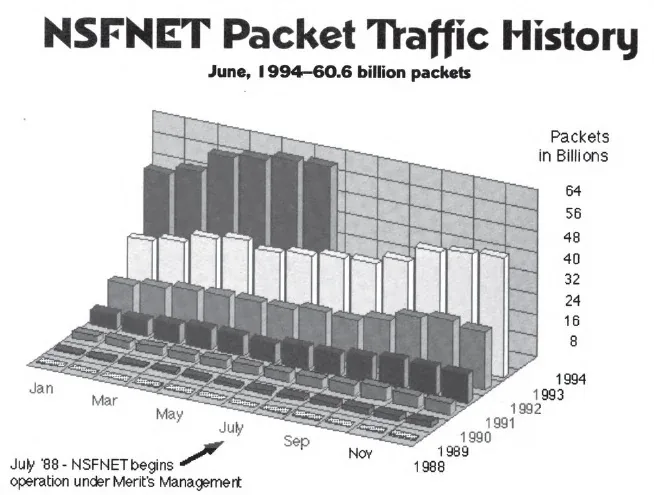
- 1990 Traffic Volume Reaches 10 Billion Packets/Month
- 1991 45 Mbit/s (T-3) Backbone
- 1992 International Connections to 38 Countries
NSF.net is among the earliest registered domains in the .net top-level domain, its domain record still carrying a creation date of November 5, 1986. The Foundation took a name in the new namespace within two years of its definition, at a point when the whole of .net held a handful of entries.
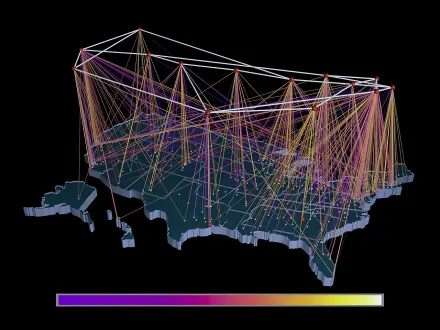
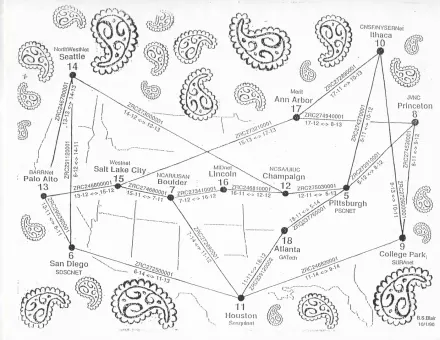
The initial NSFNET backbone operated at 56 kilobits per second, connecting the NSF’s supercomputing centers across the United States. While modest by today’s standards, this backbone represented cutting-edge networking technology at the time and provided the essential infrastructure for collaborative research computing.
The upgrade to T-1 speeds (1.5 megabits per second) marked a 24-fold increase in backbone capacity. This significant enhancement enabled more efficient data transfer between research institutions and supported the rapidly growing number of connected networks. The T-1 backbone facilitated more complex research applications and supported the network’s expansion to include more educational institutions.
By mid-1989, NSFNET had connected over 500 individual networks, representing thousands of computers and tens of thousands of users. This rapid growth demonstrated the demand for high-speed networking in research and education communities.
Network traffic grew exponentially, reaching 10 billion packets per month by the end of 1990. This growth rate of approximately 20% per month demonstrated the increasing reliance on network communications for research and collaboration.
The transition to T-3 speeds (45 megabits per second) represented another dramatic improvement, providing 30 times the capacity of the T-1 backbone. This upgrade came at a crucial time as internet adoption was accelerating and multimedia content was beginning to emerge. The T-3 backbone supported the early growth of the World Wide Web and enabled more sophisticated network applications, as detailed in the NSF’s historical documentation.
By 1992, NSFNET had established connections to 38 countries across six continents, truly making it a global network. These international connections facilitated unprecedented international research collaboration.
Technical and Research Achievements
- 1987 Network Operations Center Established
- 1989 First Implementation of BGP Routing
- 1990 Development of NSFNET Network Database (NDB)
- 1991 Creation of the first Network Information Services
- 1993 Mosaic Web Browser Development
The establishment of the Network Operations Center at Merit Network set new standards for professional network management. The NOC pioneered 24/7 monitoring and support services that became the model for internet service providers worldwide.
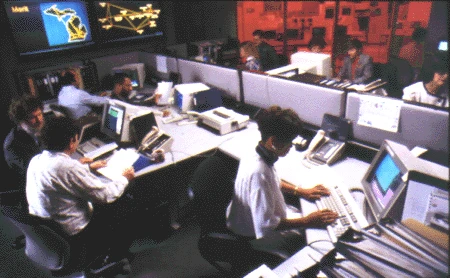
The operators’ meetings Merit convened for the regional networks outlasted the backbone itself. At the Regional-Techs meeting in San Diego in February 1994 the group widened its charter to take in network service providers generally and took a new name: NANOG, the North American Network Operators’ Group. Its funding came from the Foundation to begin with, through the backbone service and the Routing Arbiter project, and Merit coordinated it until 2011. It still meets.
The Border Gateway Protocol, first deployed on NSFNET, revolutionized inter-network routing and remains the foundation of internet routing today. This innovation enabled the scalable growth of the internet by efficiently managing routing between autonomous systems.
The NDB provided comprehensive statistics on network performance and usage, creating the first large-scale internet measurement infrastructure. These tools enabled data-driven network management and capacity planning.
NSFNET established centralized information services that later evolved into essential internet resources like domain name registries and routing registries. These services provided critical coordination functions for the growing internet.
The development of the NCSA Mosaic web browser at the NSF-supported National Center for Supercomputing Applications revolutionized internet accessibility. As the first widely-used graphical web browser, Mosaic made the internet accessible to non-technical users and catalyzed the explosive growth of the World Wide Web. Many of Mosaic’s innovations formed the foundation for modern web browsers, as documented by the NCSA’s Mosaic project history.
Policy and Governance Achievements
- 1991 Acceptable Use Policy Revision
- 1990 Creation of the Federal Networking Council
- 1994 Development of the NAP Model
- 1995 Commercial Development of the Internet
NSFNET’s Acceptable Use Policy was revised to allow limited commercial activities, beginning the transition toward the commercial internet. This policy change carefully balanced research needs with growing commercial interest.
The Federal Networking Council, formed in 1990 out of the reorganized Federal Research Internet Coordinating Committee, coordinated internet-related activities across government agencies, creating a unified approach to network development and policy. In October 1995 it passed the resolution that gave the word “Internet” its formal definition. The coordinating structure of that period is described from the inside in RFC 1160 (May 1990), which sets out the Internet Activities Board and its task forces, the part played by NSF and the other federal agencies funding internet research, and the Council’s role among them.
The Network Access Point model created by NSF established the framework for commercial internet exchange that continues today. This model enabled competition among service providers while ensuring universal connectivity.
The decommissioning of the NSFNET backbone in 1995 marked the transition from a government-funded research network to the commercially operated internet we know today. This transition was carefully planned and executed, establishing a sustainable model for internet growth and development. The NSF’s vision of a widely accessible network had been realized, setting the stage for the internet to become a global communication platform.
Recognition
- 2013 Stephen Wolff inducted into the Internet Hall of Fame as a Pioneer
- 2014 Dennis Jennings inducted into the Internet Hall of Fame as a Pioneer
The Internet Hall of Fame has recognized two of the figures most closely associated with NSFNET. Jennings was honored for the 1985 decision to build the network on TCP/IP, and Wolff for directing its expansion and preparing the transition to commercial providers.
The sources from which this account is drawn are listed separately.
Cite this page
NSF.net. “Achievements.” NSFNET: A History of the National Science Foundation Network. Last modified July 30, 2026. https://nsf.net/achievements.