People
The program directors and engineers whose decisions shaped the network.
On this page
The National Science Foundation set the program’s direction and funded it, and six program directors held that post across the network’s decade of operation. Merit Network ran the backbone service, with IBM providing the equipment and software and MCI the circuits it ran on.
Much of what follows is drawn from Merit’s final report on the NSFNET partnership, written as the backbone service was retired and quoting most of the people named here. The University of Michigan’s Deep Blue repository holds the program book published for the project’s twentieth anniversary, NSFNET: The Partnership that Changed the World.
National Science Foundation
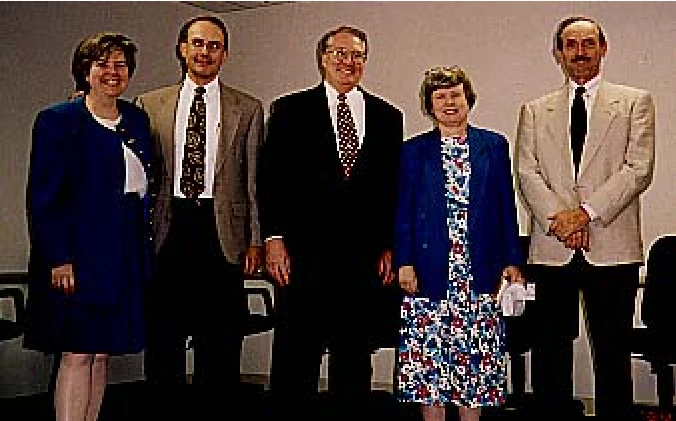
Dennis Jennings
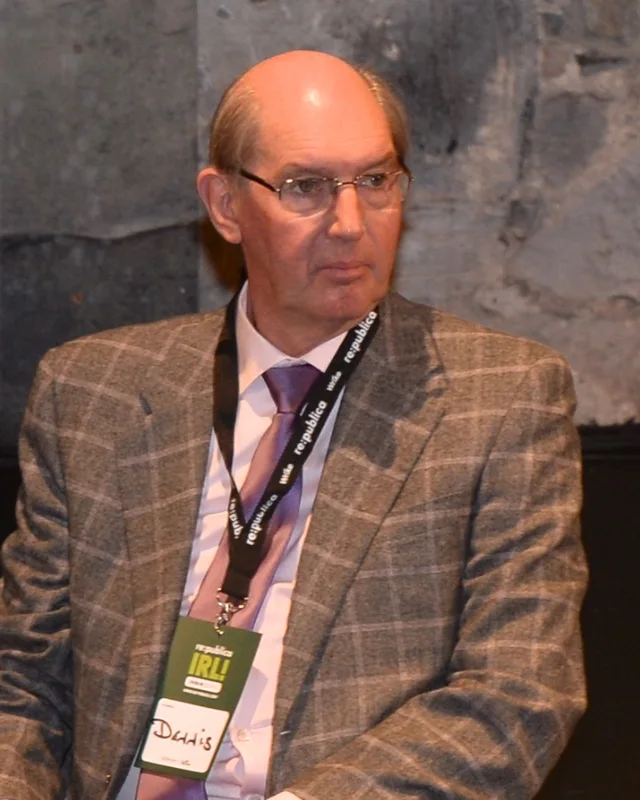
Recruited to NSF from University College Dublin in 1985 as the first NSFNET Program Director, Jennings made the crucial decision to adopt TCP/IP protocols for NSFNET, ensuring compatibility with the emerging internet. Merit’s account calls him the driving force behind the inception of the backbone project. The Internet Hall of Fame, which inducted him as a Pioneer in 2014, records his key contribution as the selection of the DARPA TCP/IP protocol suite and his insistence that it be deployed across the whole of NSFNET. He directed computing services at University College Dublin from 1977 to 1999, and later served on the board of ICANN.
Stephen Wolff
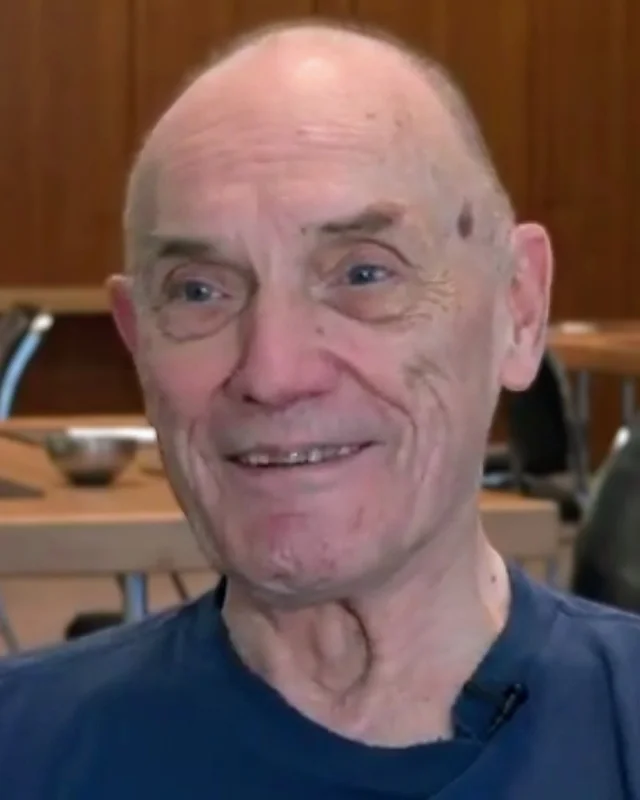
Wolff was a communications engineer at the Army’s research laboratory when he was brought to the National Science Foundation as the second NSFNET Program Director in June 1986. He orchestrated NSFNET’s expansion and developed the strategy for transitioning to commercial internet service providers, and became Division Director of NCRI in September 1987, just before the award to Merit was announced. Al Weis of IBM put his contribution plainly: “There was one person with a lot of guts, a lot of brains, and a lot of vision. And that person was Steve Wolff.” He joined Cisco in 1994, later served as interim vice-president and chief technology officer of Internet2, and was inducted into the Internet Hall of Fame as a Pioneer in 2013.
Jane Caviness
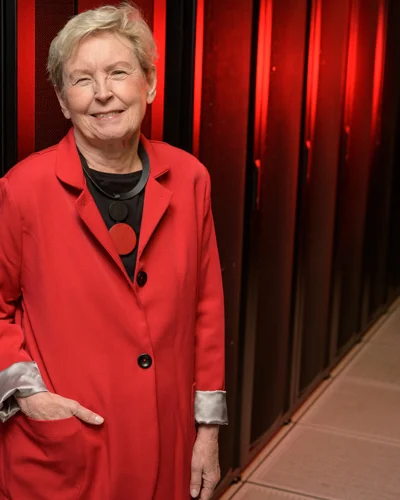
Director of Academic Computing Services at the University of Delaware, Caviness succeeded Wolff as NSFNET Program Director in September 1987 and held the role until 1990, when she became Deputy Division Director of NCRI. Wolff credited her with holding the program together through the years when the regional networks were being built on grants too small to build them: she went to each network in turn, told them the money would not stretch, and asked them to find the rest. In his telling, the academic community came through. She thought the Foundation’s remit was what set it apart, since it served science and engineering generally where other agencies answered to specific missions. “The way we ran the program made it very easy for people to use the backbone, to connect, to do all kinds of tasks,” she said.
Douglas Gale
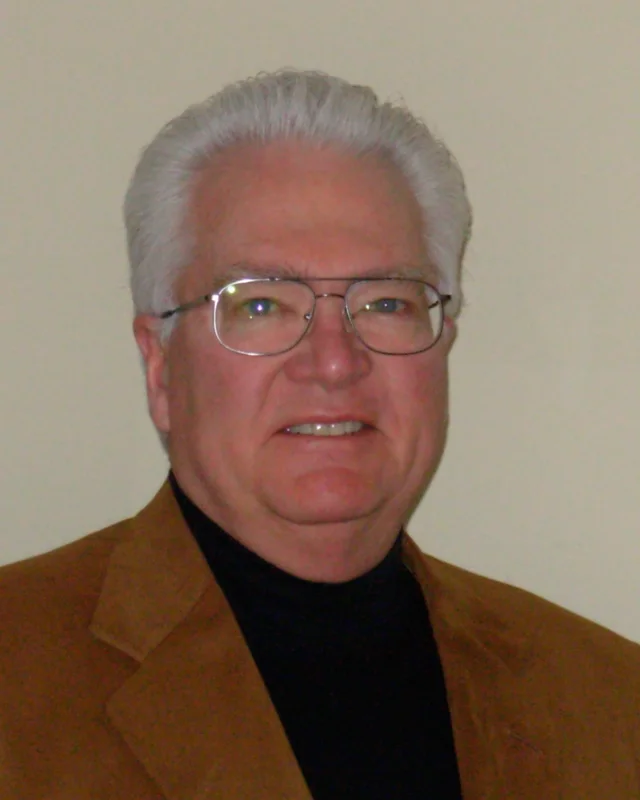
Gale succeeded Caviness as Program Director in 1990. He did much of the background work for the information services component of the 1993 NSFNET solicitation, the competition that would replace the backbone service with commercial providers meeting at public exchange points. He also set up new organizational procedures for the Foundation’s Connections program, which funded campuses onto the network.
George Strawn
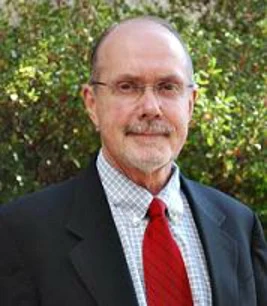
Strawn succeeded Gale in 1991 and was Program Director until March 1993. Merit’s report credits him with being instrumental in realizing the vision for the new NSF architecture: the arrangement of Network Access Points, commercial backbones and a separate very high-speed network for research that took the place of the NSFNET backbone in 1995.
Priscilla Huston
Huston came to NSF in March 1993 from Rice University, where she directed Computing Information Services. Merit’s report, written in 1995, records her as Program Director from 1993; by her own account she held the post until July 1996, through the backbone service’s final years and the transition to commercial providers. Work had just begun on evaluating proposals for the new architecture when she arrived. A past chair of EDUCOM’s Board of Trustees, she described the division of labor between the Foundation and its contractor: “With the NSFNET program, NSF funded and encouraged Merit, but Merit facilitated the meetings, the open discussion, and got industry and others to be proactive.”
Merit Network
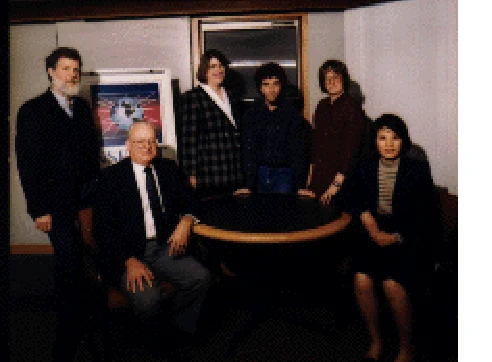
Doug Van Houweling
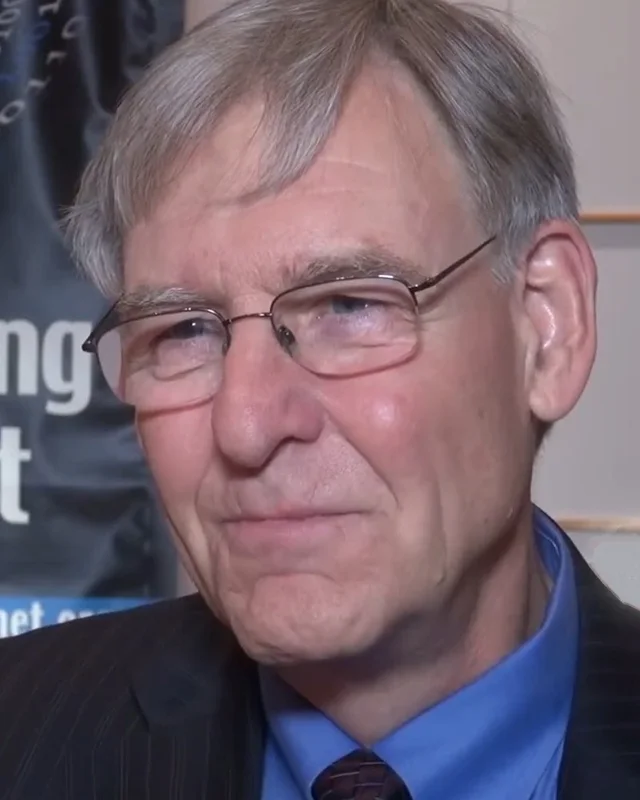
Van Houweling chaired Merit’s board of directors in 1987 as Vice-Provost for Information Technology at the University of Michigan, and assembled the partnership that answered the Foundation’s solicitation. He had already discussed a satellite-based network for higher education with IBM while at Carnegie Mellon, and went back to the same people with the NSFNET proposal. His reasoning was a division of the problem into three: “We felt we needed a university organization, and Merit certainly filled that role. We needed a software and equipment provider, and IBM certainly fulfilled that role. But we also needed a carrier for the communication.” That is where MCI came in.
Eric Aupperle
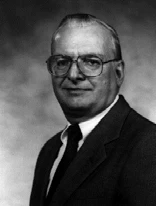
As President of Merit Network, Aupperle coordinated the partnership with IBM and MCI that managed the backbone infrastructure. He had led Merit since 1974, alongside a post in the University of Michigan’s Information Technology Division, and it was his judgement that what Merit had learned running MichNet within one state could be taken to the country as a whole. He was among the handful of people in the early meetings with IBM out of which the bid was built.
Hans-Werner Braun
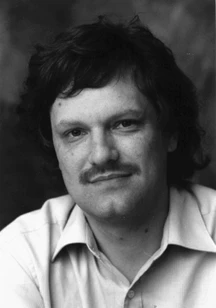
As co-Principal Investigator of the NSFNET project at Merit, Braun provided technical leadership for the backbone service, overseeing its dramatic expansion. He managed Merit’s Internet Engineering group from 1987 to 1991 and was a principal designer of the routers used on the first 56 kbit/s backbone. He documented the backbone’s routing architecture in RFC 1093 (February 1989), and its interconnection with the Defense Data Network, with J. Y. Yu, in RFC 1133 (November 1989). By mid-1987 the first backbone was already overloaded, and he recalled why: “People started to use it, and to like it, and to rely upon it. Their research was already critically dependent on the network being available.”
Elise Gerich
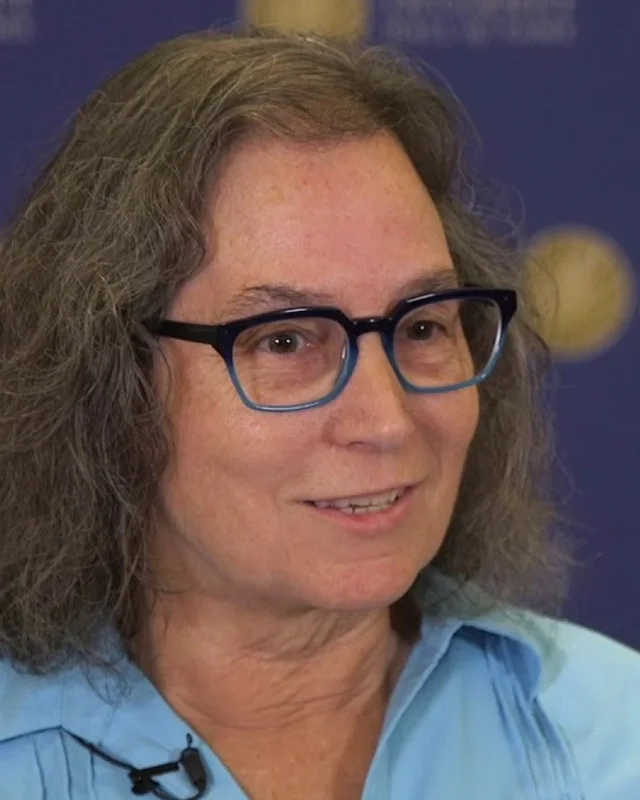
Gerich was a member of the original Merit team and became Associate Director for National Networking, taking over Merit’s Internet Engineering group in 1994, three years after Mark Knopper had succeeded Braun in the post. She was one of the engineers who built the working relationships with counterparts at IBM, MCI and the regional networks on which the day-to-day running of the backbone depended. What struck her about the partnership was that it held: “If any one of the partners had balked, we probably couldn’t have done what we did.”
IBM and MCI
The Foundation funded the backbone and Merit ran it, but neither built it alone. Merit’s bid divided the work three ways, and the two companies that took the other two parts stayed with the project for its whole life.
Al Weis
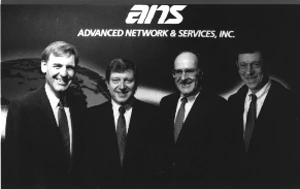
Weis led IBM’s side of the partnership from IBM Research, and it was he who approached MCI about carrying the traffic. IBM’s interest was in what it did not yet know: “IBM was unable to interconnect its large mainframes and some of its new workstations to all the research communities’ networks and get adequate performance, because those networks were TCP/IP networks. By working on the NSFNET backbone service, we learned a lot.” In September 1990 he became president of Advanced Network & Services, the non-profit the partners created to build the T3 network, because no commercial equipment for it yet existed.
Walter Wiebe
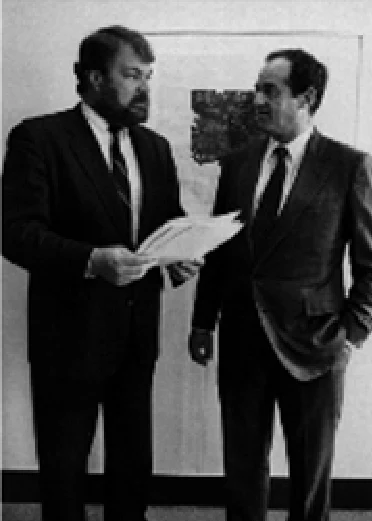
Wiebe was the senior manager for networking in IBM’s Academic Information Systems division, responsible for the NSFNET program, and took part in the earliest meetings out of which the bid was assembled. Bob Mazza, photographed with him, led the NSFNET project for IBM.
Rick Boivie
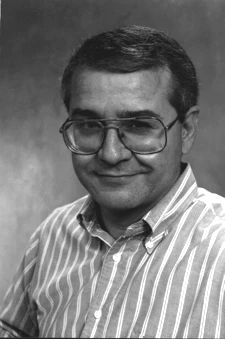
Boivie was NSFNET Development Manager at IBM, and came, like Wiebe, from the Academic Information Systems division. He was in the early meetings with Merit and on the team that spent six weeks at the University of Michigan assembling the proposal, a group drawn from all three partners that also included Paul Bosco, S. S. Soo, Mathew Dovens and Len Dedo.
Jack Drescher
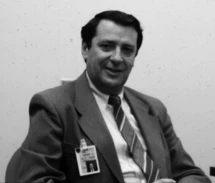
IBM assembled a special engineering team and placed it in Merit’s offices in Ann Arbor. Drescher led it, then a Product Manager at IBM’s Research Triangle Park Laboratory, with Jim Sheridan and Rick Ueberroth. Working from Michigan, with Wiebe and Paul Bosco in Connecticut and Jordan Becker in New York, he managed the detailed plan that took the partners from February 1988 to production in July of the same year.
Harvey Fraser
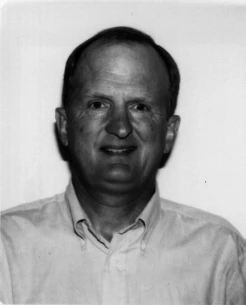
Fraser was IBM’s project manager on-site at Merit for the backbone service, taking the post in mid-1989. He described a partnership that spent more than its agreements required: “The team worked well because we had resources, executive time, and the desire to make it a success, as well as a lot of good faith and good will. When issues came up, we evaluated them and, if we could, provided whatever was needed. For example, when we needed more routers, IBM got them for us. If we needed more lines for a test network, MCI got them for us.”
Alan Baratz
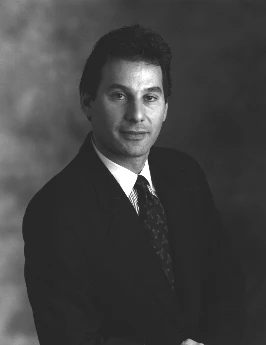
Baratz directed IBM Research’s High-Performance Computing and Communications work, and led the engineering behind the T3 upgrade. “We built the first robust, high-performance T3 routers operational anywhere in the world,” he said of it. Each T3 node was a single IBM RS/6000 doing in one box, and far faster, what the nine IBM RTs of a T1 node had done between them.
Larry Bouman
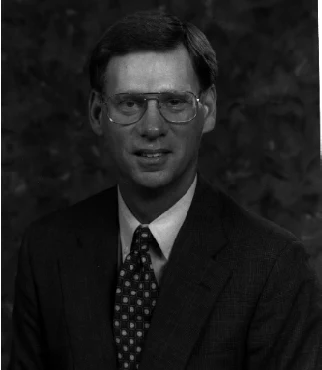
Bouman was MCI’s Senior Vice-President for Network Operations. MCI had 34,000 miles of network and a coast-to-coast fibre optic network by 1987, and no experience of data networking at these speeds; Weis recalled Dick Liebhaber, the MCI vice-president who joined the partnership at the start, saying that MCI had always been known as a voice company, and that if it was going to learn about data there was no better opportunity than this.
Cite this page
NSF.net. “People.” NSFNET: A History of the National Science Foundation Network. Last modified July 30, 2026. https://nsf.net/people.