Merit Network
The leaders of Merit Network, which managed the NSFNET backbone service from 1987 to 1995.
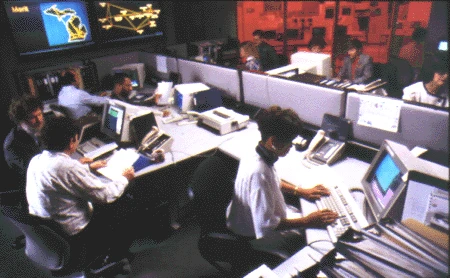
Merit, the consortium of Michigan universities that ran the Merit Computer Network, held the Foundation’s award to re-engineer and manage the backbone, as the Link Letter pointed out in 1988. Its NSFNET staff worked in three groups, each with a page of its own: Internet Engineering, which designed the backbone’s routing; the Network Operations Center, which watched it around the clock; and Information Services, which supported the people who used it.
Much of what appears on these pages is drawn from Merit’s final report on the NSFNET partnership, written as the backbone service was retired and quoting most of the people named here. The University of Michigan’s Deep Blue repository holds the program book published for the project’s twentieth anniversary, NSFNET: The Partnership that Changed the World.
Doug Van Houweling

Van Houweling chaired Merit’s board of directors in 1987 as Vice-Provost for Information Technology at the University of Michigan, and assembled the partnership that answered the Foundation’s solicitation. He had already discussed a satellite-based network for higher education with IBM while at Carnegie Mellon, and went back to the same people with the NSFNET proposal. His reasoning was a division of the problem into three: “We felt we needed a university organization, and Merit certainly filled that role. We needed a software and equipment provider, and IBM certainly fulfilled that role. But we also needed a carrier for the communication.” That is where MCI came in.
Eric Aupperle
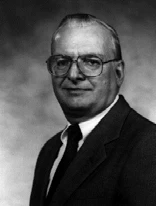
As President of Merit Network, Aupperle coordinated the partnership with IBM and MCI that managed the backbone infrastructure. He had led Merit since 1974, alongside a post in the University of Michigan’s Information Technology Division, and it was his judgement that what Merit had learned running MichNet within one state could be taken to the country as a whole. He was among the handful of people in the early meetings with IBM out of which the bid was built.
Hans-Werner Braun
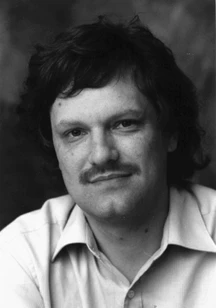
As co-Principal Investigator of the NSFNET project at Merit, Braun provided technical leadership for the backbone service, overseeing its dramatic expansion. He managed Merit’s Internet Engineering group from 1987 to 1991 and was a principal designer of the routers used on the first 56 kbit/s backbone. He documented the backbone’s routing architecture in RFC 1093 (February 1989), and its interconnection with the Defense Data Network, with J. Y. Yu, in RFC 1133 (November 1989). By mid-1987 the first backbone was already overloaded, and he recalled why: “People started to use it, and to like it, and to rely upon it. Their research was already critically dependent on the network being available.”
Elise Gerich

Gerich was a member of the original Merit team and became Associate Director for National Networking, taking over Merit’s Internet Engineering group in 1994, three years after Mark Knopper had succeeded Braun in the post. She was one of the engineers who built the working relationships with counterparts at IBM, MCI and the regional networks on which the day-to-day running of the backbone depended. What struck her about the partnership was that it held: “If any one of the partners had balked, we probably couldn’t have done what we did.” In May 1988 the Link Letter listed her in Merit/NSFNET Information Services as technical site liaison, consulting for staff at the thirteen backbone sites.
Cite this page
NSF.net. “Merit Network.” NSFNET: A History of the National Science Foundation Network. Last modified November 22, 2026. https://nsf.net/people/merit-network.
Also in People
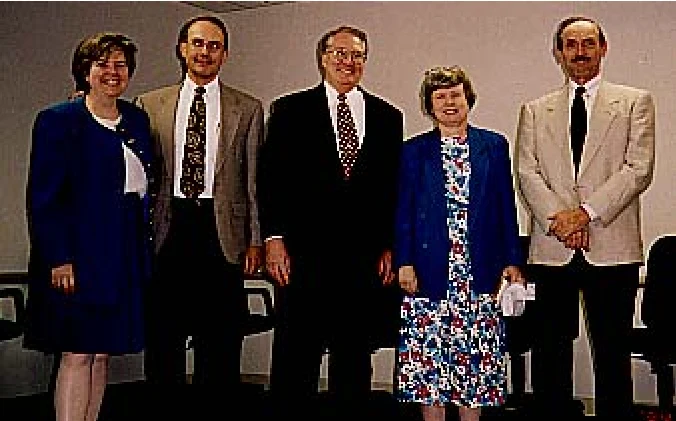
National Science Foundation
The six program directors who set the NSFNET program's direction and funded it.
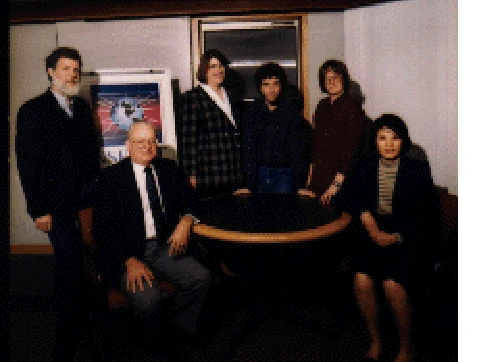
Merit Internet Engineering
The engineers who designed the backbone's routing and brought the regional networks onto it.
Merit Network Operations Center
The manager and operators who watched the backbone around the clock from Ann Arbor.