IBM and MCI
The partners who supplied the backbone's equipment, software and circuits.
On this page
The Foundation funded the backbone and Merit ran it, but neither built it alone. Merit’s bid divided the work three ways, and the two companies that took the other two parts stayed with the project for its whole life.
Al Weis
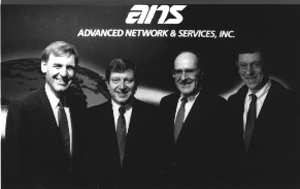
Weis led IBM’s side of the partnership from IBM Research, and it was he who approached MCI about carrying the traffic. IBM’s interest was in what it did not yet know: “IBM was unable to interconnect its large mainframes and some of its new workstations to all the research communities’ networks and get adequate performance, because those networks were TCP/IP networks. By working on the NSFNET backbone service, we learned a lot.” In September 1990 he became president of Advanced Network & Services, the non-profit the partners created to build the T3 network, because no commercial equipment for it yet existed.
Walter Wiebe
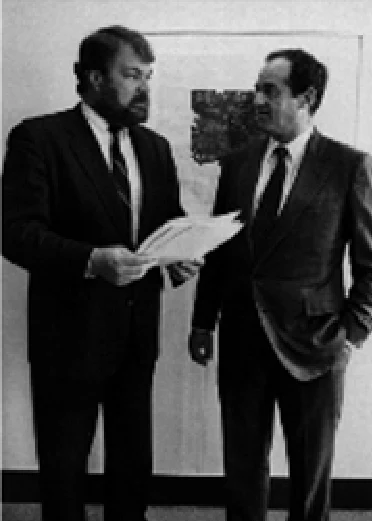
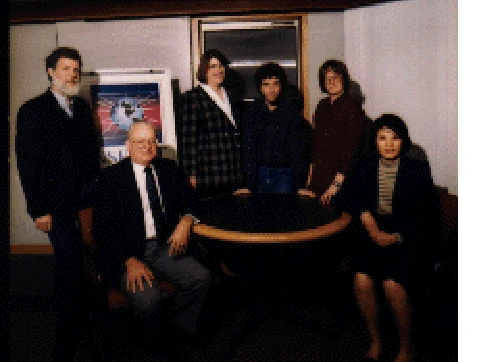
Wiebe was the senior manager for networking in IBM’s Academic Information Systems division, responsible for the NSFNET program, and took part in the earliest meetings out of which the bid was assembled. Bob Mazza, photographed with him, led the NSFNET project for IBM.
Rick Boivie
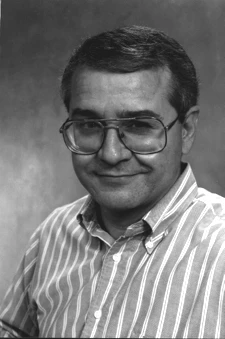
Boivie was NSFNET Development Manager at IBM, and came, like Wiebe, from the Academic Information Systems division. He was in the early meetings with Merit and on the team that spent six weeks at the University of Michigan assembling the proposal, a group drawn from all three partners that also included Paul Bosco, S. S. Soo, Mathew Dovens and Len Dedo.
Jack Drescher
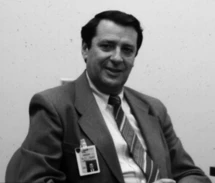
IBM assembled a special engineering team and placed it in Merit’s offices in Ann Arbor. Drescher led it, then a Product Manager at IBM’s Research Triangle Park Laboratory, with Jim Sheridan and Rick Ueberroth. Working from Michigan, with Wiebe and Paul Bosco in Connecticut and Jordan Becker in New York, he managed the detailed plan that took the partners from February 1988 to production in July of the same year.
Harvey Fraser
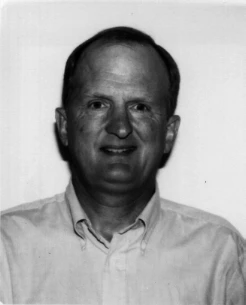
Fraser was IBM’s project manager on-site at Merit for the backbone service, taking the post in mid-1989. He described a partnership that spent more than its agreements required: “The team worked well because we had resources, executive time, and the desire to make it a success, as well as a lot of good faith and good will. When issues came up, we evaluated them and, if we could, provided whatever was needed. For example, when we needed more routers, IBM got them for us. If we needed more lines for a test network, MCI got them for us.”
Alan Baratz
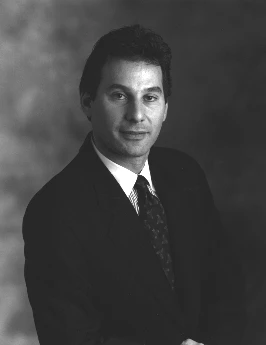
Baratz directed IBM Research’s High-Performance Computing and Communications work, and led the engineering behind the T3 upgrade. “We built the first robust, high-performance T3 routers operational anywhere in the world,” he said of it. Each T3 node was a single IBM RS/6000 doing in one box, and far faster, what the nine IBM RTs of a T1 node had done between them.
Yakov Rekhter

Rekhter wrote the backbone’s routing code for IBM with Bert Wijnen (per Cathy Aronson). He worked at IBM’s Thomas J. Watson Research Center in Yorktown Heights, and Merit’s final report credits the routing design and engineering that carried the regional networks onto the T1 backbone to him and Jessica Yu of Merit. He set out how the new backbone would exchange routes with the regional networks over EGP, and choose among them by policy, in RFC 1092 (February 1989). Braun recalled a weekend on which every routing daemon on the backbone crashed: “I called the person who developed the routing software, Yakov Rekhter at IBM-Yorktown, at home on a Sunday and had a fix for the problem in about two hours.” With Kirk Lougheed of Cisco Systems he designed the Border Gateway Protocol, sketched, as Gerich told it, on a napkin outside an IETF meeting, and published as RFC 1105 in June 1989. Yu and other Merit staff deployed it on the T1 backbone, and by 1995 Merit could describe it as “now used extensively on the Internet.”
Bert Wijnen
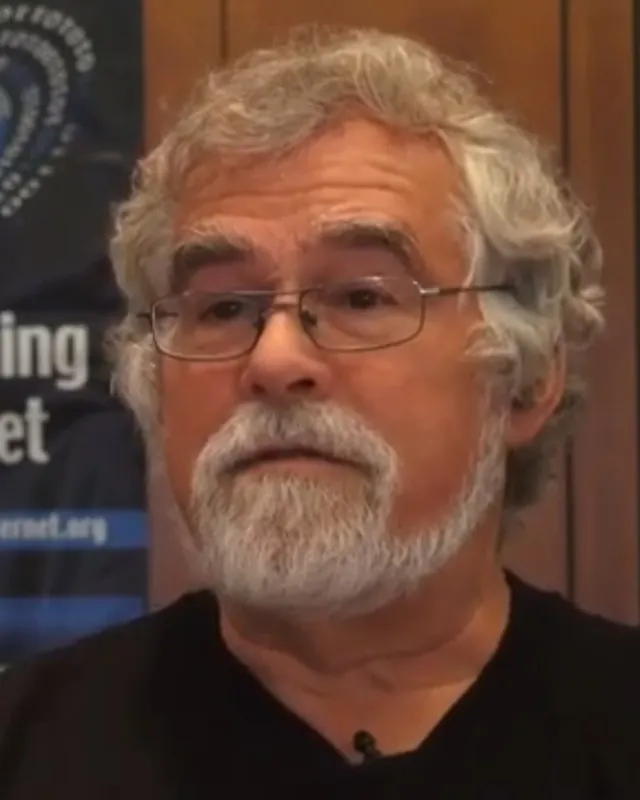
Wijnen worked with Rekhter on the backbone’s routing code for IBM, and built the first network management tool, XGMON (per Cathy Aronson). He was a colleague of Rekhter’s at IBM’s Thomas J. Watson Research Center, where he wrote, with G. Carpenter, RFC 1228 (May 1991), describing the interface IBM built into its SNMP agents so that other programs could extend the management information they reported. Network management remained his field: he was a co-author of RFC 3411 (December 2002), the architecture of version 3 of the Simple Network Management Protocol, which became Internet Standard 62.
Larry Bouman
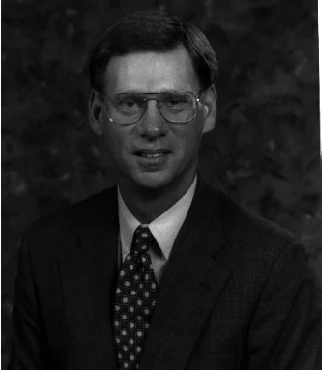
Bouman was MCI’s Senior Vice-President for Network Operations. MCI had 34,000 miles of network and a coast-to-coast fibre optic network by 1987, and no experience of data networking at these speeds; Weis recalled Dick Liebhaber, the MCI vice-president who joined the partnership at the start, saying that MCI had always been known as a voice company, and that if it was going to learn about data there was no better opportunity than this.
Cite this page
NSF.net. “IBM and MCI.” NSFNET: A History of the National Science Foundation Network. Last modified November 22, 2026. https://nsf.net/people/ibm-and-mci.
Also in People
National Science Foundation
The six program directors who set the NSFNET program's direction and funded it.
Merit Network
The leaders of Merit Network, which managed the NSFNET backbone service from 1987 to 1995.
Merit Internet Engineering
The engineers who designed the backbone's routing and brought the regional networks onto it.